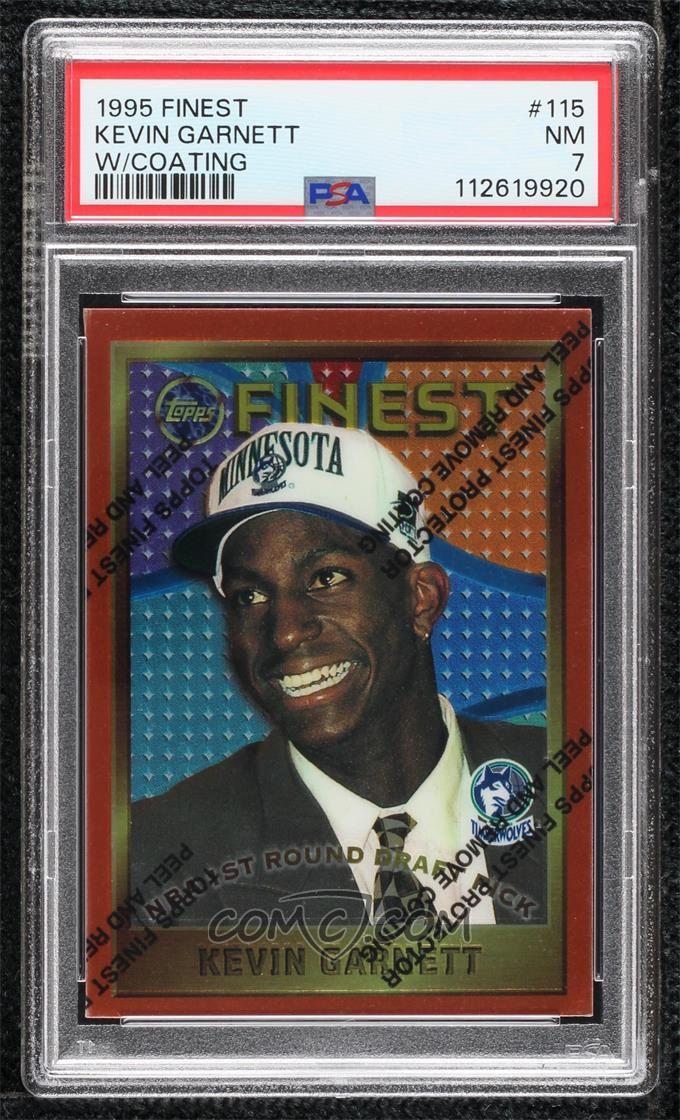
Did Kevin Garnett win the Rookie of the Year? The short answer is no. Despite making history as the first player in 20 years to jump straight from high school to the NBA, Kevin Garnett did not win the 1995‑96 NBA Rookie of the Year award. That honor went to Toronto Raptors guard Damon Stoudamire.
However, Garnett’s rookie season was still groundbreaking. His entry into the NBA paved the way for a new generation of high school-to-pro stars, and his rapid development set the stage for a Hall of Fame career. Let’s explore what happened during that rookie season, the Rookie of the Year voting results, and why Garnett’s impact went far beyond the award itself.
Kevin Garnett’s Historic Leap from High School to the NBA
In 1995, Kevin Garnett was a standout at Farragut Academy in Chicago, Illinois. He dominated the high school basketball scene, winning USA Today National Player of the Year honors. Despite interest from top college programs, Garnett decided to declare for the NBA Draft.
This decision was bold. The last player to successfully make the leap from high school to the NBA was Darryl Dawkins in 1975. Many scouts and executives questioned whether an 18‑year‑old could handle the physical and mental demands of the league.
The Minnesota Timberwolves took the risk, selecting Garnett with the 5th overall pick in the 1995 NBA Draft. It was a franchise‑changing move.
Garnett’s Rookie Season: Stats and Performance
While Kevin Garnett didn’t start the season as the Timberwolves’ primary star, his role grew steadily throughout the year. Under coach Flip Saunders, Garnett’s minutes increased, and his all-around skill set began to shine.
Kevin Garnett 1995‑96 Rookie Stats:
- Games Played: 80
- Starts: 43
- Minutes per Game: 28.7
- Points per Game: 10.4
- Rebounds per Game: 6.3
- Assists per Game: 1.8
- Blocks per Game: 1.6
- Field Goal Percentage: 49.1%
These numbers were impressive for a teenager adjusting to the NBA’s speed and physicality. Garnett showed flashes of elite defensive instincts, court vision, and mid‑range scoring ability. But while he was a clear future star, his rookie stats weren’t enough to beat out the league’s top first‑year guard.
Who Won Rookie of the Year in 1996?
The 1995‑96 NBA Rookie of the Year award went to Damon Stoudamire of the Toronto Raptors.
Damon Stoudamire Rookie Stats:
- Games Played: 81
- Points per Game: 19.0
- Assists per Game: 9.3
- Rebounds per Game: 4.0
- Steals per Game: 1.4
Stoudamire, nicknamed “Mighty Mouse,” was an undersized but dynamic point guard. He led all rookies in scoring and assists, and he immediately became the face of the Raptors’ expansion franchise. His ability to run an offense and put up big numbers earned him 76 out of 113 first-place votes in Rookie of the Year balloting.
Rookie of the Year Voting Results (1995‑96)
According to official NBA records, the Rookie of the Year voting broke down as follows:
- Damon Stoudamire – 76 first-place votes (total points: 416)
- Arvydas Sabonis (Portland Trail Blazers) – 17 first-place votes (total points: 183)
- Jerry Stackhouse (Philadelphia 76ers) – 15 first-place votes (total points: 177)
- Antonio McDyess (Denver Nuggets) – 5 first-place votes (total points: 123)
- Bryant Reeves (Vancouver Grizzlies) – 0 first-place votes (total points: 44)
- Kevin Garnett (Minnesota Timberwolves) – 0 first-place votes (total points: 33)
While Garnett placed sixth in the voting, his rookie season was more about long-term promise than immediate dominance.
Why Kevin Garnett Didn’t Win Rookie of the Year
There are several reasons Garnett didn’t win the Rookie of the Year award:
1. A Slow Start to the Season
Garnett began the year coming off the bench. He didn’t start until halfway through the season, which limited his early statistical production.
2. Competition from More Polished Players
Players like Damon Stoudamire, Jerry Stackhouse, and Arvydas Sabonis were older and more experienced. Garnett was only 19, competing against players who had multiple years of college or international experience.
3. Role and Team Context
The Timberwolves were a rebuilding team. Garnett wasn’t the first option offensively. He focused on defense, rebounding, and learning the pro game rather than putting up big scoring numbers.
Garnett’s Rookie Season Impact
Although Kevin Garnett didn’t win Rookie of the Year, his season had major implications for the future of the NBA:
- Proved High School Players Could Succeed – Garnett’s strong rookie year inspired future high school-to-NBA stars like Kobe Bryant, Tracy McGrady, and LeBron James.
- Changed Minnesota’s Trajectory – Garnett quickly became the face of the Timberwolves, leading them to eight consecutive playoff appearances from 1997 to 2004.
- Redefined the Power Forward Position – His combination of length, agility, and skill revolutionized what a big man could do.
Kevin Garnett’s Career After His Rookie Year
Kevin Garnett’s career trajectory exploded after his rookie season. Over the next two decades, he became one of the most complete and competitive players in NBA history.
Career Highlights:
- NBA Champion (2008, Boston Celtics)
- NBA MVP (2004)
- 15× NBA All-Star
- 9× NBA All-Defensive First Team
- Defensive Player of the Year (2008)
- Hall of Fame Inductee (2020)
Garnett’s relentless work ethic turned him from a promising rookie into one of the league’s most respected leaders.
Damon Stoudamire vs Kevin Garnett: Rookie Year Comparison
| Category | Damon Stoudamire (1995-96) | Kevin Garnett (1995-96) |
|---|---|---|
| Points per Game | 19.0 | 10.4 |
| Assists per Game | 9.3 | 1.8 |
| Rebounds per Game | 4.0 | 6.3 |
| Field Goal % | 42.7% | 49.1% |
| Role | Starting PG, franchise leader | Rookie forward, developing |
While Stoudamire’s numbers were flashier, Garnett’s production was impressive for an 18‑year‑old power forward in a limited role.
The Bigger Picture: Rookie of the Year Isn’t Everything
Many Hall of Famers never won Rookie of the Year. Michael Jordan did, but legends like Kobe Bryant, Dirk Nowitzki, and Shaquille O’Neal (yes, he missed in ’92‑93 to Chris Webber) either didn’t win or weren’t unanimous picks.
Kevin Garnett’s legacy shows that early accolades don’t always predict long-term greatness. While Damon Stoudamire had an excellent career, Garnett’s body of work far surpassed most of his rookie class.
 Hobby Card Review